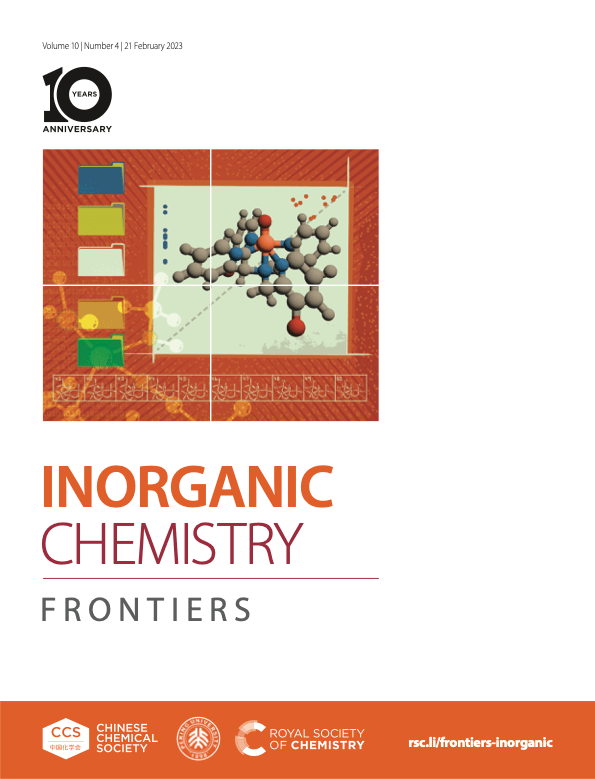
Our journal cover, reproduced with permission from Inorganic Chemistry Frontiers, 2023, 4, 1051-1370.
I am pleased to announce that the journal cover from my first, first author paper has been released in this month’s issue of Inorganic Chemistry Frontiers! In this study, we use a combination of density functional theory (DFT), machine learning (ML), and topological data analysis (TDA) for a high-throughput screening of 181k high-valent Fe(IV)-oxos for C-H bond activation. Using TDA, we introduce novel similarity metrics to help curate data and as a molecular representation to predict C-H activation barriers and spin states.
For more information regarding our paper and methods follow the links below:
This is a post about how I got to where I am today. This about my transformative years at the College of Charleston in Charleston, South Carolina. (>20 minute read)
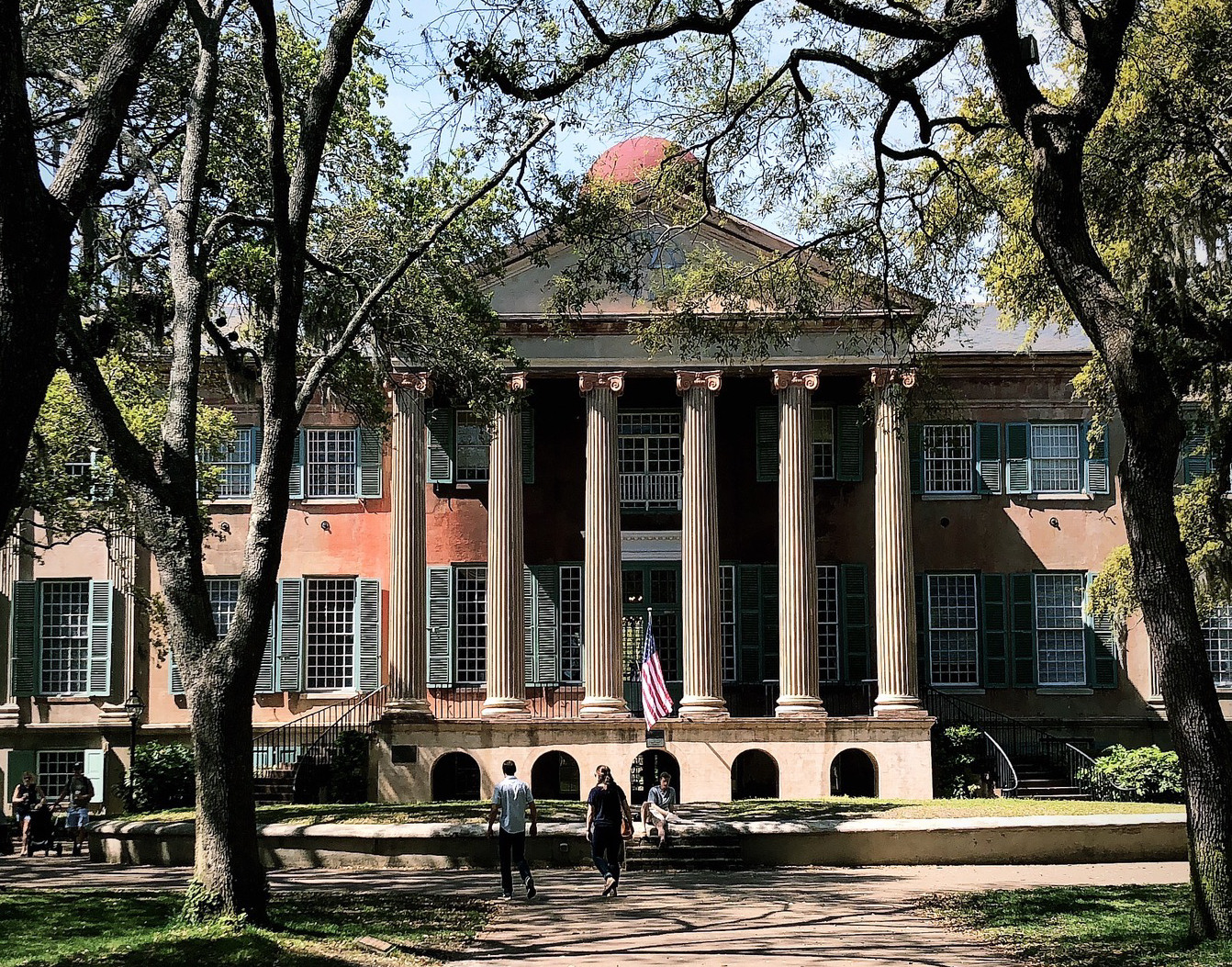
An image of Randolph Hall and the Cistern as seen from Porters Lodge.
A common cliche in the US is that college (undergraduate studies) is the best four years of someones life. I argue that this viewpoint is often too narrow to describe the true nature and transformative power of a college education. For me, college was full of ups and downs, struggling to find my place as a person and as a scientist, balancing a social life in a world renowned city with rigorous courses, and the loss of one of my best friends in my last semester of college. These experiences taught me the skills needed to succeed and stay motivated in graduate school. In this blog post I will talk about my four years of undergraduate studys at the College of Charleston (CofC) and how it led to where I am today.
The Spark Ignites
To get an idea about how I chose to go to the College of Charleston, we have take a step back and examine my high school years for a brief moment. To add a little perspective I must add that I went to a small 1A high school, Blacksburg High School, in the upstate of South Carolina with a graduating class of about 110. In high school, I was a member of the marching band for six years, on the wrestling team for two years (which I was not very good at), threw shotput and discus on the track and field team for one year, was on the academic quiz bowl team, and an AP/duel enrollment student. I took every AP class that was available at the time: English Composition and Literature, Calculas AB, and Psychology. By far my favorite (and also one of the two I did not pass the AP exam on) was AP Calculus AB. Growing up, I had always loved math and science but calculus was when I truly began to understand how mathematics could help explain the physical world around us. I had always loved reading popular science books and magazines but I was always left wanting by the lack of mathematical explaination offered in most books. The book that helped cement my budding love of mathematics and married the concepts I had learned in AP Calculus and in popular science books was Love and Math: The Art of Hidden Reality by Edward Frenkel. In this book Frenkel, an émigré of the former Soviet Union, compares our current understanding of mathematics to learning to paint but only being able to paint simple things like a white picket fence when really mathematics should be compared to famous works of art such as a The Stary Night by Vincent van Gogh. The book goes down a wonderful path from the discrimination he faced in the former Soviet Union to working on the Langlands Program (considered to being the Grand Unified Theory of mathematics by many mathematicians) as a professor in the United States. A defining moment in my high school career was when I emailed Robert Langlands, the father of the Langlands program and who occupations Einstein’s former office at the Institute for Advanced Study, with an extremely naive, high school level question about the Grand Unified Theory of mathematics and how it could relate to the Grand Unified Theory of physics. He responded the next day and said that it was not very likely that there was any relationship between the two. Depsite my question being naive, his response was transformative for me because this legend in mathematics took the time to email me back! This showed me that mathematics was accessible to someone like me, a kid from rural South Carolina, who did not have all of the fancy AP/IB/duel enrollment courses available at other schools.
Love and Math: The Heart of Hidden Reality by Edward Frenkel
With this and my love for pop physics in mind, I knew I wanted to go into a STEM field… I just did not know what STEM field to choose. I was accepted to a handful of schools, both in state and out of state, but once I visited the College of Charleston I knew that as the place for me. I chose the College of Charleston for a variety of reasons: proximity to the beach, campus being in the middle of a small, metropolitan city, proximity to the Medical University of South Carolina (MUSC, if I wanted to go to medical school), and for the shrimp and grits!
The Metamorphosis
Not knowing what STEM field to go into yet, I tentatively chose astrophysics but was leaning towards a pre-medicine related major such as biochemistry or biology. Freshman year I enrolled in a First Year Experience (FYE) course for pre-medicine students, a dual course FYE which included introductory chemistry and biology for students interested in the pre-medicine route. I was severely unprepared for the stress and workload of college and struggled tremendously in both courses, along with Calculus I. The professors of the three STEM courses I was taking at the time were amazing and extremely helpful but one dramatically changed and shaped the current path I am on. I ended up passing general chemistry by the skin of my teeth after many office hours in Dr. Riggs-Gelasco’s office (who is also chair the Department of Chemistry and Biochemistry). I had been spiraling, looking for direction and did not know if mathematics, chemistry, physics, or biology were for me. During one of my office hour visits with Dr. Riggs-Gelasco, I had expressed my confusion and search for direction into which STEM field to choose, I do not remember all the details, but I remember talking a little bit about Richard Feynman and I immediately changed my major to biochemistry (I would later change it to chemistry my junior year). I did not quite understand why I was attracted to the field of chemistry but I knew it could help explain important problems related to our understanding of life on other planets, climate change, and industrial process lithium-ion batteries, medicine, etc.
The next semester I took general chemistry II, general biology II, and vector calculus with chemical applications, a five credit our course for chemist with a broad overview of calculus II-III, linear algebra, group theory, and ordinary differential equations. This course, along with a visit to our campus research fair are what cemented the path I had started down the semester before and am still journeying on still to this day. At the spring research fair, I had talked to several chemistry and biology professors from CofC, a few researchers based out of MUSC, and one mathematics professor. Most professors, except for the mathematics professor, had told me I need to take organic chemistry, molecular biology, or biochemistry before I could start research with them. The mathematics professor, Dr. Garrett Mitchener, had peaked my attention by talking about the strange world of mathematical biology. He told me about projects related to the biological evolution of both speech and genetics. We discussed topics like how to simulate artificial life and how mathematics could help describe the world around us. I told him, I may not have all the required background courses or knowledge but I was willing to work hard and learn whatever he wanted me to learn inorder to start doing research with him that summer. Soon after, I declared a minor in mathematics and the path was set, I had a direction for which I was now heading.
The Path Defined
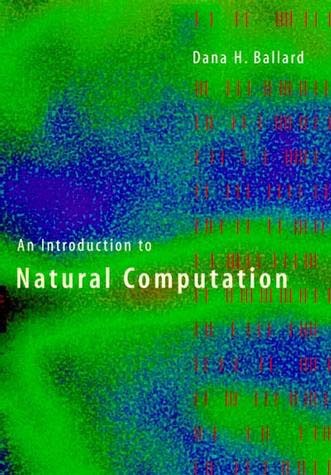
An Introduction to Natural Computation by Dana H. Ballard
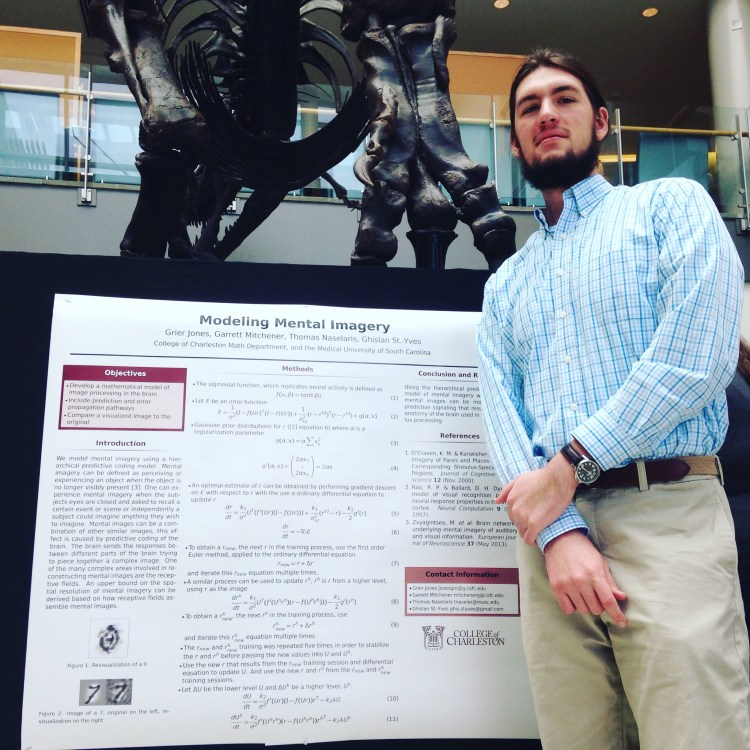
Coastal summers were soul crushing. Floods, temperatures often rising above 100 ºF, tropical storms, and the beating sun were common. Walking into the Robert Scott Smalls building, a former campus library in the heart of campus in Cougar Mall, on my first day of research, during the summer of 2015, I was sweaty and nervous. I did not know what to expect from my research mentor or the project that I was going to try to complete. Arriving a little earlier than expected, I sat and stared at the graduate school and study abroad posters that line the hallway to ease my nerves. When it was five minutes before the time I was supposed to arrive, I nervously knocked on Dr. Mitchener’s door. We chatted about the task at hand, where to start, and meeting with our collaborator’s Dr. Thomas Naselaris and his post-doc at the time, Dr. Ghislan St.-Yves, from MUSC. Dr. Mitchener handed me a packet on Mathematica, the mathematical software language that I would use for the project, and a copy of An Introduction of Natural Computation by Dana H. Ballard. That first week, I learned the basics of Mathematica, neural networks, and about predictive coding in the visual cortex (based on Rao, R., Ballard, D. Nat Neurosci2, 79–87 (1999)). That summer I worked for six weeks on A Mathematical Model of Mental Imagery. In this project we tried to use the tools of machine learning to build a biologically inspired neural network to model mental imagery. During this summer I learned a lot and was the sole undergradute in the room with three PhDs during our meetings with collaborators. This made me feel like I had a place in the world to do research and that my opinion was respect. The mentorship and guidance from Dr. Mitchener allowed me to present at several different poster sessions and at a Department of Mathematics weekly colloquium during my sophomore year.
Spring 2016 School of Science and Mathematics poster session for my first research project.
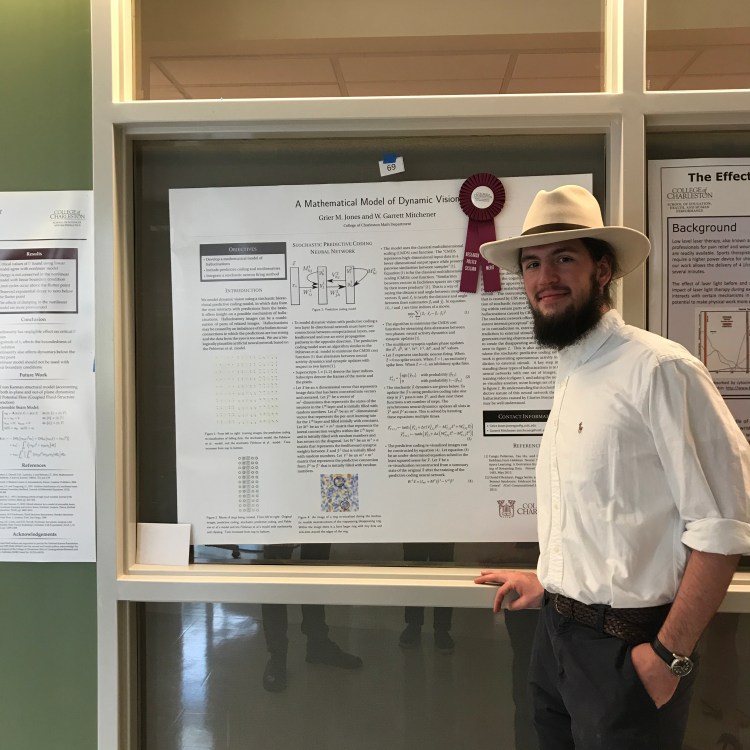
After the first summer of research, I found a passion for mathematics and how it could describe complex systems in the world around us. I knew at the time, that the following summer (the summer between my sophomore and junior year) that I wanted to continue doing reseach and working with Dr. Mitchener. The summer project following my sophomore year, A Mathematical Model of Dynamic Vision, was similar to my first project yet more complex project since we were trying to model hallucinations associated with diseases like Charles Bonnet syndrome. This project was more complex because we had to create moving images in order to get our machine learning model to hallucinate. That year I presented at another weekly Department of Mathematics colloquium. In the spring of my junior year, I presented a poster on A Mathematical Model of Dynamic Vision and won an award at the Spring 2017 School of Science and Mathematics poster session for having the best poster in the Department of Mathematics as a chemistry major!
Presenting my second research project at the Spring 2017 School of Science and Mathematics poster session. I won an award for best poster in the Department of Mathematics as a chemistry major!
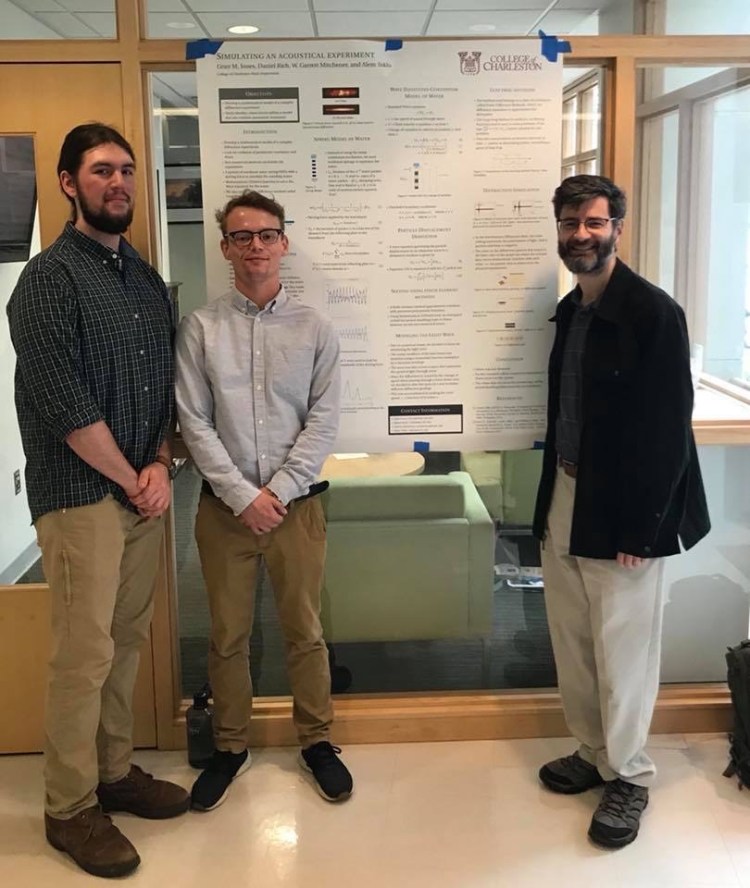
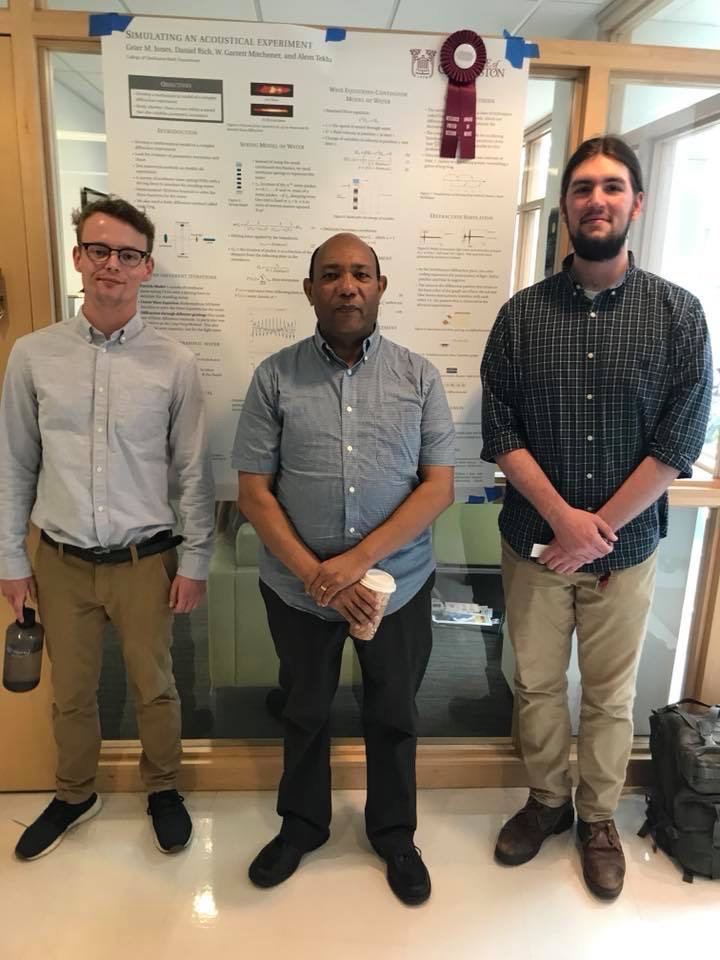
During the spring of junior year, I was taking general physics II and the professor Dr. Alem Teklu had heard about my research project that had won an award at the poster session. After class one day he asked me if I wanted to collaborate with him on a complex diffraction experiment that had peaked his interest. As always, I knew I wanted to continue working with Dr. Mitchener and asked if we could collaborate on this project with Dr. Teklu. The three of us started to communicate about how we would go about this project, since it was quite ambitious, and Dr. Mitchener wanted to include Daniel Rich, an undergraduate from his Mathematical Modeling course, on the project. The project was an intersection between an acoustical and optical experiment where weird dynamical effects, proclaimed to be chaotic, occured. What made this project so interesting is that the optical set up was perpendicular to a pulsing ultrasonic microphone in water. When the light passed through the tank of water, where the ultrasonic microphone was pulsing, light began to diffract and as the amplitude of the ultrasounds increased, the light supposedly descended into chaotic patterns. I say supposedly because we could never prove that the system exihibited any chaos associated with period doubling bifurications. On the social aspect of the project, tensions were initially high between Daniel and I, since I had never collaborated with another undergraduate before and I wanted all the potential glory for myself. In retrospect, I know that was not a good look at the time but it allowed me to grow as a person and helped show me that science and mathematics are team sports. The irony of the whole situation is that Daniel became one of my best friends, I love that dude like a brother and I still send him annoying texts, beat him at 8ball phone games, and send him dumb memes. After becoming friends, the two of us gave a colloqium talk in the Department of Mathematics, like I had done solo the two years before. The best part of this story is that we had a happy ending. We later went on to win the award for having the math poster at the Spring 2018 School of Science and Mathematics poster sesson and went on to the finals and finished in second place behind a biology poster. Team work really made the dream work.
Daniel Rich, my partner in “crime”, and I won the best poster award in the Department of Mathematics at the Spring 2018 School of Science and Mathematics poster session. We later went on to the final round of awards and got second place behind another poster in biology.Spring 2018 School of Science and Mathematics poster session: Me, Daniel Rich, and our research mentor Garrett Mitchner (left to right)Spring 2018 School of Science and Mathematics poster session: Daniel Rich, our research collaborator Alem Teklu, and me (left to right)
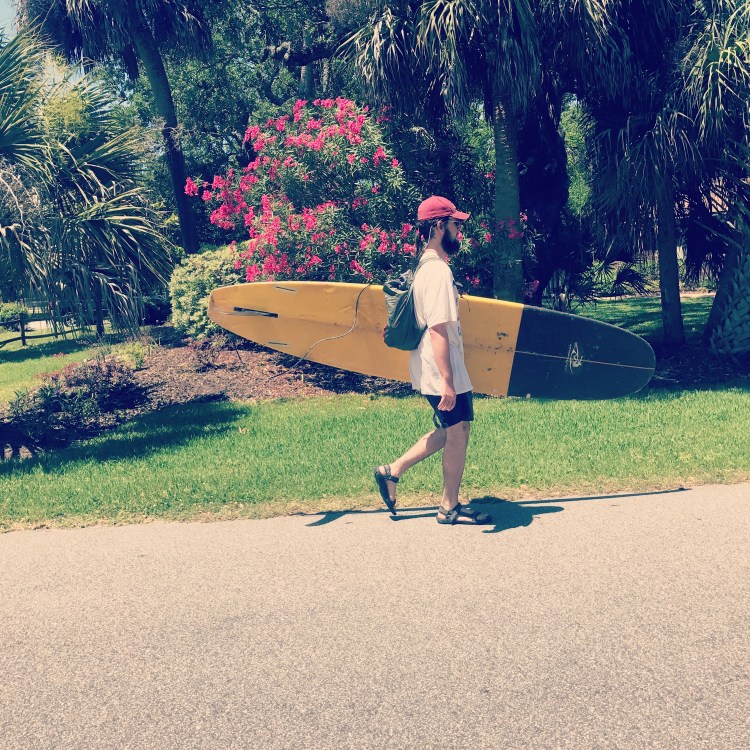
One thing I have to mention is that there was a dark side to my summers of research. Outside of research, what shaped me the most during the summers was how grueling it was on my mental health. I suffered severe depression and anxiety from the monotony of the work day and the loneliness I experienced after the work day during the first two summers of research. Working eight hours a day, five days a week, when you are basically by yourself outside of work was very hard. Without the support of family members, friends, and my mentor Dr. Garrett Mitchener I would have never experienced the joys and intellectual fulfillment I get from doing research. I had to embrace the mundane, monotony, and “boring” research days. During the first two summers, reading, running, walking, and watching netflix are what got me through the lonely evenings after work. What got me through my last summer of research was going to the beach, surfing, and hanging out with my friends. I was never really good at surfing but it was always nice to be out on the water… except for that one time I saw a shark next to me (YIKES).
Summer 2017: Studying wave equations and waves on a surfboard
The Finish Line
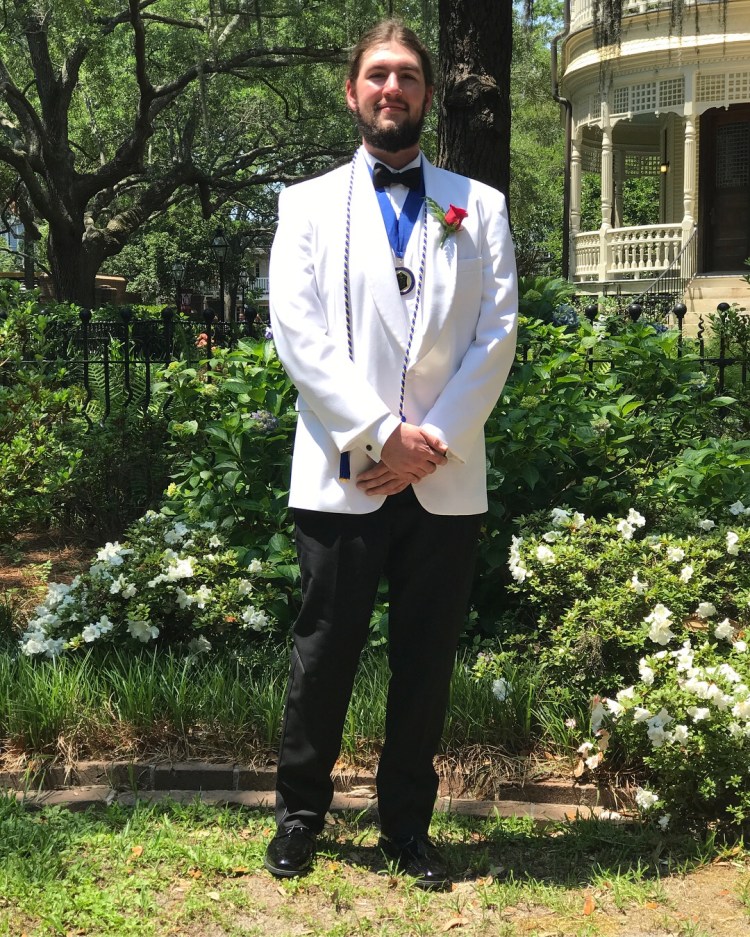
After graduation, standing in front of Sottile house
Up until the fall of my senior year (2017), I was determined I was going to go to graduate school to get a PhD in Mathematical Biology. What really changed my mind was Physical Chemistry I, which focused on statistical mechanics, thermodynamics, and kinetics, and the idea of taking Physical Chemistry II, quantum mechanics, in spring of 2018. I did not really have an understanding of what quantum mechanics but during the fall semester I started doing computational chemistry research with Dr. Gamil Gurgius. I was using Møller-Plesset Second-Order Perturbation Theory, a post Hartree-Fock method, to understand the geometric conformations of five member silane rings. With research in machine learning, mathematical physics, and computation chemistry under my belt I knew that I wanted to combine my love for the three when I got to graduate school. I applied to a handful of schools, mainly in the south, and was looking for a mentor who would allow me to do all three. I lucked out, got into the University of Tennessee, Knoxville and signed my contract to go there before I ever visited. I graduate from the College of Charleston on May 12, 2018 and started my graduate school journey soon after.
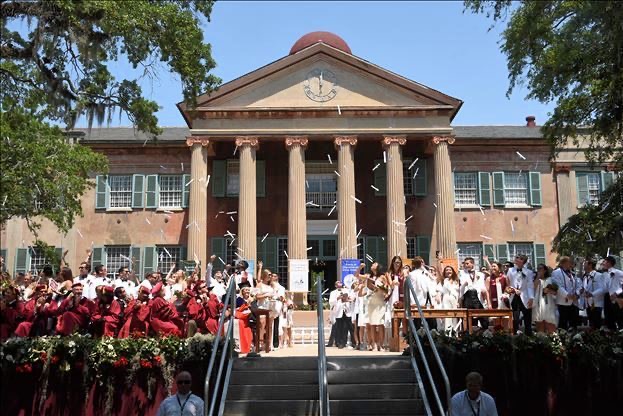
The finish line (photo courteous of GradImages)
Setting Sunand New Horizons
The sunsetting on four years of hard work.
I left the city and friends I loved dearly, for the chance to make my name as a theoretical and computational chemist at the University of Tennessee, Knoxville. Despite how much I miss Charleston and my fellow Charlestonians, I have progressed both as a professional and as a person in my pursuit of deeper understanding of the world around us. At the university I am advised by Dr. Konstantinos Vogiatzis on a project that is a marriage between computer science, machine learning, and quantum mechanics. I want to use these tools, along with cloud computing, to help make computational chemistry more accessible to researchers around the world and to help us further understand fundamental problems related to climate change.
The truth about research is that it is rarely eureka moments, amazing discoveries, and constant external fulfillment. Research is the grueling process of driving knowledge forward, dragging the field, hell or high water, into the future. It is days of mundane data collection, theorizing, coding, and reading to edge the field forward, just a nudge, so that we can expand our knowledge and understand the universe around us. Without my undergraduate research experiences I would have never been ready for graduate school and the self motivation that is required to succeed. I will forever be indebted to my grade school teachers who believed in me and encourged me to follow my dreams, my college professors, advisors, and mentors who gave me encouraging, sometimes down right honest advice, and who also believed and encouraged me to continue on with my education. On September 4, 2019 I gave my first conference talk in Perugia, Italy. When I first got onto the stage, I stared out into the audience, for a brief moment I visualized all of the people who have believed in me and encourged me throughout my life and also the giants, whose shoulders I now stand on, as I look into the future, towards the vast unknown that is science.
I am very pleased to announce that our ACS In Focus digital primer, Molecular Representations for Machine Learning, has been released on Google Play and the ACS In Focus webpage. The overarching goal of this primer is to provide an overview of the basic categories of molecular representations and hands-on examples, using Python, so that the reader can readily apply these methods. Overall, this primer took a tremendous amount of work and I would like to thank my fellow coauthors: Brittany Story, Vasileios Maroulas, and Konstantinos Vogiatzis; the talented team of editors and graphic designers at the American Chemical Society, who provided valuable insights and figures throughout the writing process; and the reviewers and labmates, who provided useful feedback to help make this manuscript better.
One inspiration for this work was from when Konstantinos Vogiatzis (professor) and I (teaching assistant) taught Machine Learning for Chemical Applications in the Fall of 2021 at the University of Tennessee, Knoxville. During the course of that semester, we found many useful texts (textbooks, eBooks, articles, etc.), data repositories, and open source software packages that are included in this digital primer. With pedagogy and the principles of free and open-source software in mind, we have compiled our code examples in a GitHub repository which can be found here: Molecular Representations for Machine Learning Examples. All of these examples can either be downloaded and ran locally or can be launched using Google Colab, which can launch directly in your Google drive.
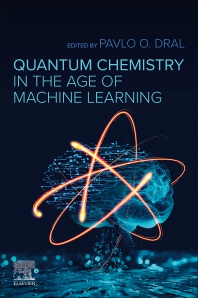
Cover of Quantum Chemistry in the Age of Machine Learning
I’m pleased to announce that our book chapter, Chapter 22. Data-driven acceleration of coupled-cluster and perturbation theory methods by Grier M. Jones, P. D. Varuna S. Pathirage, Konstantinos D. Vogiatzis in Quantum Chemistry in the Age of Machine Learning, published by Elsevier, is finally in press! In our book chapter, we discuss the data-driven quantum chemistry (DDQC) schemes developed within our group, including case studies of the data-driven coupled-cluster singles and doubles (DDCCSD) and data-driven complete active space second-order perturbation theory (DDCASPT2) methods. Writing the book chapter provided me with excellent professional development opportunities, including creating a website and GitHub repository (linked below) for our DDQC methods. Even if you do not have access to the book chapter, feel free to checkout the code examples developed by Varuna (DDCCSD) and me (DDCASPT2)!
From June 27-29, 2022 I attended the 2022 Cyberinfrastructure-Enabled Machine Learning (CIML) Summer Institute hosted by the San Diego Supercomputer Center (SDSC) at the University of California San Diego via Zoom. The goal of CIML was to teach best practices for scalable machine learning on high-performance computing (HPC) resources. In the future, I may write blogs on other interesting topics from CIML as I apply them to my research. This blog is about how to run Jupyter notebooks using batch jobs on a supercomputer. The prerequisites for the concepts covered in this blog include:
BASH scripting
Conda environments
Jupyter notebooks
Python
High-performance computing
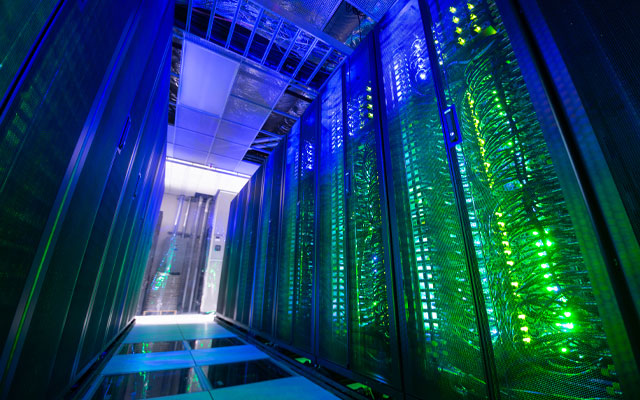
An image of SDSC’s Expanse supercomputer designed by Dell and SDSC, a petaflop scale computer build specifically for the eXtreme Science and Engineering Discovery Environment (XSEDE) program (image courtesy of https://www.sdsc.edu/support/user_guides/expanse.html).
Machine learning (ML) and artificial intelligence (AI) are becoming as ubiquitous, in the computational sciences, as HPC. One common tool for running ML/AI tasks, ran either on HPC resources or locally, are interactive notebooks such as Jupyter notebooks. On HPC resources, Jupyter notebooks are often ran using an interactive session hosted by Open OnDemand (http://openondemand.org/) or via an interactive SLURM job. While it is usually sufficient to run one Jupyter notebook at a time, sometimes we would like to change a variable or two and test the results. One way you can do this in an automated fashion, is with Papermill (https://github.com/nteract/papermill). Papermill is an interesting tool for parameterizing and executing Jupyter notebooks. Since the documentation on parameterizing Jupyter notebooks can be found in the documentation in the GitHub repository documentation above, I will not discuss this here.
In this example, I use a SLURM script called batch_cpu.sh to run a set of Jupyter notebooks with data from the GDB-111,2 database ranging from molecules with 5 to 11 atoms. This is set up similar to a normal SLURM script with the addition of setting up a conda environment in an automated fashion.
#!/bin/bash
# Batch script to run Jupyter Notebooks on a CPU node.
#SBATCH --account=ACCOUNTNAME             # The project account to be charged
#SBATCH --job-name=batch_jupyter
#SBATCH --nodes=1                     # Number of nodes
#SBATCH --ntasks-per-node=4          # cpus per node
#SBATCH --partition=CONDONAME            # If not specified then default is "campus"
#SBATCH --qos=QUALITYOFSERVICENAME
#SBATCH --time=0-90:00:00             # Wall time (days-hh:mm:ss)
#SBATCH --error=job.e%J        # The file where run time errors will be dumped
#SBATCH --output=job.o%J               # The file where the output of the terminal will be dumped

# Purge modules (I always keep intel-compilers loaded out of habit)
module purge
module load intel-compilers

# To make the environment.yml file:
# conda env export | grep -v "^prefix: " > environment.yml
# specify name of Conda environment, path to environment.yml file,
# notebook directory and a results directory
CONDA_ENV="ENVNAME"
REPO_DIR="./"
CONDA_YML="${REPO_DIR}/environment.yml"

export LOCAL_SCRATCH_DIR="/path/to/scratch/${USER}/cpu"

# download miniconds3
if [ ! -f "Miniconda3-latest-Linux-x86_64.sh" ]; then
   wget https://repo.anaconda.com/miniconda/Miniconda3-latest-Linux-x86_64.sh
   chmod +x Miniconda3-latest-Linux-x86_64.sh
fi

# install miniconda3 on node local disk
export CONDA_INSTALL_PATH="${LOCAL_SCRATCH_DIR}/miniconda3"
export CONDA_ENVS_PATH="${CONDA_INSTALL_PATH}/envs"
export CONDA_PKGS_DIRS="${CONDA_INSTALL_PATH}/pkgs"
./Miniconda3-latest-Linux-x86_64.sh -b -p "${CONDA_INSTALL_PATH}"
source "${CONDA_INSTALL_PATH}/etc/profile.d/conda.sh"

# use mamba to create conda environment
${CONDA_INSTALL_PATH}/bin/conda install mamba -n base -c conda-forge --yes
${CONDA_INSTALL_PATH}/bin/conda env create -f ${CONDA_YML}

# run notebooks using papermill
${CONDA_INSTALL_PATH}/bin/mamba init
${CONDA_INSTALL_PATH}/bin/mamba activate ${CONDA_ENV}
${CONDA_INSTALL_PATH}/bin/conda install papermill -c conda-forge --yes

conda info


# Loop for 5-9
for i in {5..9}; do
   echo "Creating ${i}"
   export resultdir="GDB0${i}"
   if [ ! -d ./${resultdir} ]; then
    echo "${resultdir} does not exist!"
    mkdir ${resultdir}
   fi
   export GDB1="0${i}"
   export GDB2="${i}"
   ${CONDA_ENVS_PATH}/${CONDA_ENV}/bin/papermill project.ipynb ${resultdir}/project.ipynb -r GDB1 ${GDB1} -r GDB2 ${GDB2}
done

# Loop for 10 and 11
for i in 10 11; do
   echo "Creating ${i}"
   export resultdir="GDB${i}"
   if [ ! -d ./${resultdir} ]; then
    echo "${resultdir} does not exist!"
    mkdir ${resultdir}
   fi
   export GDB1="${i}"
   export GDB2="${i}"
   ${CONDA_ENVS_PATH}/${CONDA_ENV}/bin/papermill project.ipynb ${resultdir}/project.ipynb -r GDB1 ${GDB1} -r GDB2 ${GDB2}
done
Note that the flag -r, which asks papermill to read the raw string is passed to papermill instead of -p. This is because ${GDB1} and ${GDB2} should be strings and the parameters flag, -p, will automatically make ${GDB1} and ${GDB2} integer values. To submit this script to the queue type this in command line:
sbatch batch_cpu.sh
It should also be noted that if you would like to use a conda environment you have created in the past, remove all the lines that download and create a new conda environment. I also use ${CONDA_ENVS_PATH}/${CONDA_ENV}/bin/papermill to make sure the right version of papermill is called. In this example I also use mamba, which is a rapid application development platform (RAD) that can be utilized instead of conda for installing python packages.
Python Script f-string alternative
Another option, that I have used in the past, is creating a python script where the variable you would like to change is passed to a string containing your variable as an f-string. This is fine as long as the input/code you are writing iteratively is not too long. If your code is hundreds of lines this is too cumbersome and I would recommend the method above.
This script can submit numerous jobs using a python script that iteratively generates python and SLURM scripts:
for i in dict.keys():
    with open(f'{i}/PROJECTNAME.inp','w') as g:
        if len(dict[i])!=0:
            inp=f"""
File contents that require f-string
{i}
"""
            inp2="""
file contents
"""
            g.write(inp+inp2)

    with open(f'{i}/script.sh','w') as k:
        slurm=f"""#!/bin/bash
# Batch script to run Jupyter Notebooks on a CPU node.
#SBATCH --account=ACCOUNTNAME             # The project account to be charged
#SBATCH --job-name=python_script
#SBATCH --nodes=1                     # Number of nodes
#SBATCH --ntasks-per-node=4          # cpus per node
#SBATCH --partition=CONDONAME            # If not specified then default is "campus"
#SBATCH --qos=QUALITYOFSERVICENAME
#SBATCH --time=0-90:00:00             # Wall time (days-hh:mm:ss)
#SBATCH --error=job.e%J        # The file where run time errors will be dumped
#SBATCH --output=job.o%J               # The file where the output of the terminal will be dumped

# DEFINE NAME OF THE PROJECT
export Project=PROJECTNAME

# THE COMMAND
executable $Project.inp > $Project.out
"""
        k.write(slurm)
    os.system(f'cd {i} && sbatch script.sh && cd ../')
This is a short description of what I do as a theoretical and computational chemist. I wanted this blog to be to the point. The heavy mathematical details and jargon are omitted. This blog is dedicated to my cousin and fellow blogger, Denny McBride (1970-2020)
My laboratory does not look like one you would probably imagine when you think of a chemistry lab. We do not have beakers, Schlink lines, tanks of gas, bottles of reagents, or even a hood. The most dangerous things in my lab are electricity and the espresso machine. Theoretical and computational chemistry is a mix of chemistry, physics, mathematics, statistics and computer science. As theoretical and computational chemists, we use computers to solve the time-independent electronic Schrödinger equation to study chemical reactions, molecular geometries, and spectroscopic and photophysical properties of molecules. The use of quantum mechanics to study these systems is called electronic structure theory. My research in particular is a marriage between electronic structure theory and machine learning. Both are powerful theoretical tools for enhancing our knowledge of chemistry.
The fundamental laws necessary for the mathematical treatment of a large part of physics and the whole of chemistry are thus completely known, and the difficulty lies only in the fact that application of these laws leads to equations that are too complex to be solved.
Paul A. M. Dirac
Proc. R. Soc. Lond. A 1929 123, 714-733
The quote above by the famous physicist, Paul Dirac, highlights the difficulty of electronic structure theory–the calculations are time intensive and require a lot of computational resources. My project centers around accelerating costly and resource intensive electronic structure theory calculations with machine learning. My project is difficult, yet rewarding since it allows me to further explore the connections between subjects I love, such as chemistry, physics, mathematics, and computers.
A short blog post about my trip to Italy in September 2019.
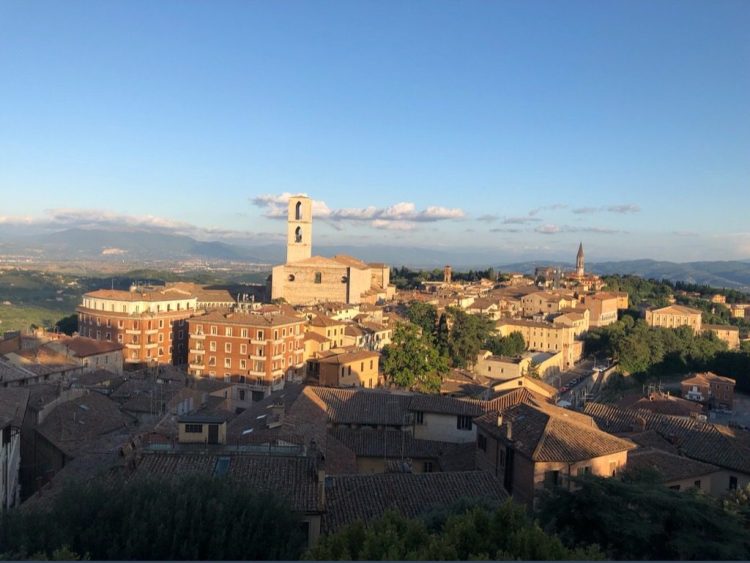
Looking towards Assisi
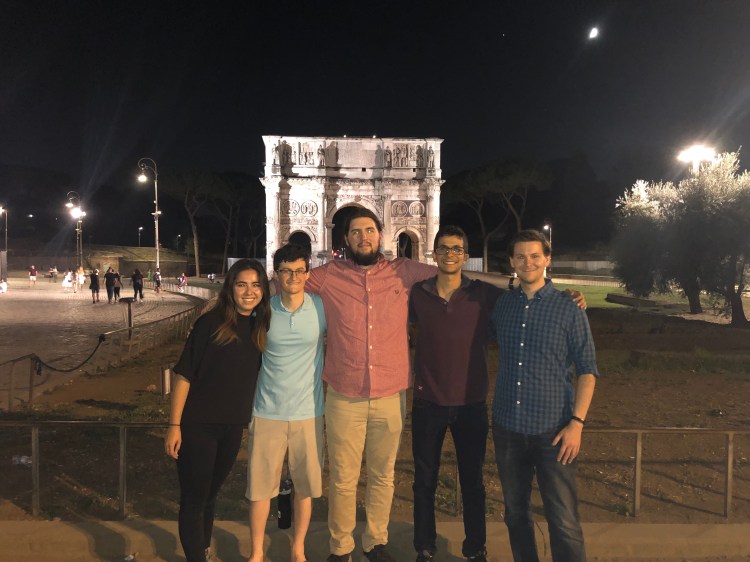
During the summer of 2019, having just finished my first year of my PhD program, I wanted to expand my horizons and my network. I applied and received a travel grant through the Molecular Software Science Institute (MolSSI) to attend the Open Molecular Science Cloud workshop held in Perugia and Rome, Italy. MolSSI is an institute based in Blacksburg, Virginia, that “serves as a nexus for science, education, and cooperation serving the worldwide community of computational molecular scientists – a broad field including of biomolecular simulation, quantum chemistry, and materials science” (https://molssi.org/about/). The participants from the United States included three other grant awardees, a representative from MolSSI, Daniel Smith (a fellow College of Charleston graduate I should mention!), and myself. The other grant awardees included (as listed in the picture below): Jessica Maat from University of California, Irvine, Stefan Seritan from Stanford University, and Vinicius Cruizerio from University of California, San Diego.
The first part of the workshop was hosted at the 12th European Conference on Computational Theoretical Chemistry (CTC EUCO 2019) in Perugia, Italy (September 2-5, 2019). At CTC EUCO 2019, I gave a talk proposing a resource to perform wavefunction based quantum chemical calculations using machine learning and cloud computing. The second half of the workshop was hosted at the Accademia Nazionale delle Scienze in Rome, Italy and focused on the development of the Open Molecular Science Cloud (OMSC) (September 5-6). During the Open Molecular Science Cloud (OMSC) workshop we worked on the development of a proposal for an open source cloud computing resource for computational chemists through the European Open Science Cloud framework. During the trip, I learned new things about open source software, cloud computing, and building collaborative projects. When I was not busy with the workshop, I visited the Vatican, explored Rome and Perugia, and enjoyed wonderful Italian cuisine—all while building my network! I’m very thankful for MolSSI for giving me the opportunity to attend this workshop and the CTC EUCO 2019 organizers for allowing me to give a talk at their conference. The stimulating talks and conversations with scientists from Europe and the United States helped me find a new passion for open source software and scientific computing.
Jessica Maat (UC Irvine), Stefan Seritan (Stanford University), me, Vinicius Cruzerio (UC San Diego), and Daniel Smith (MolSSI at the time)
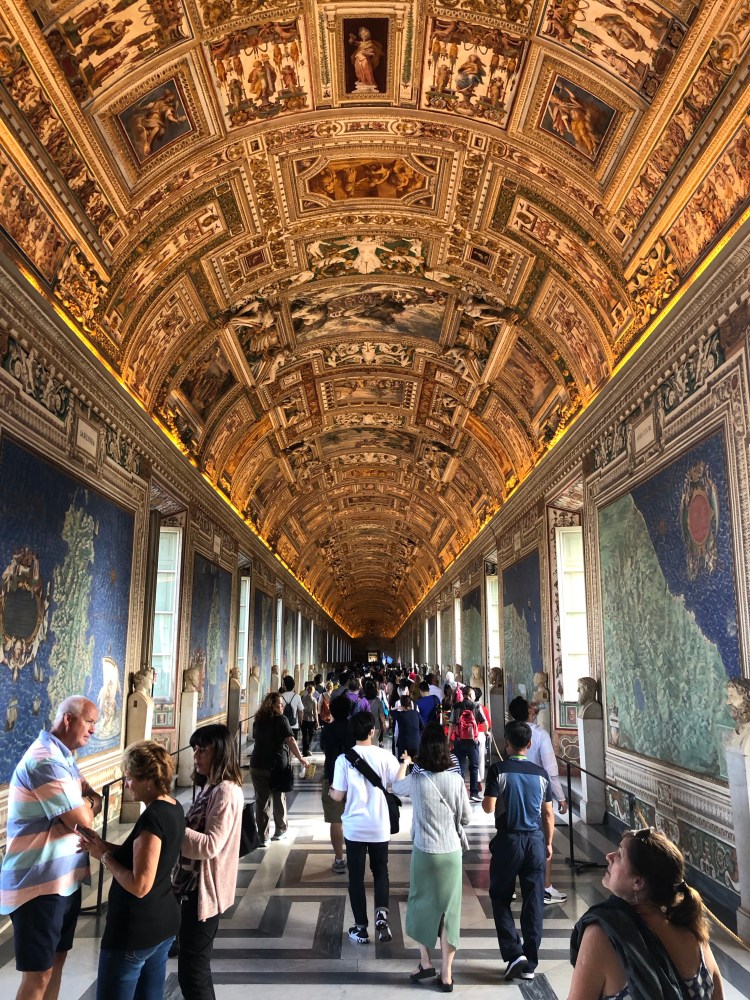
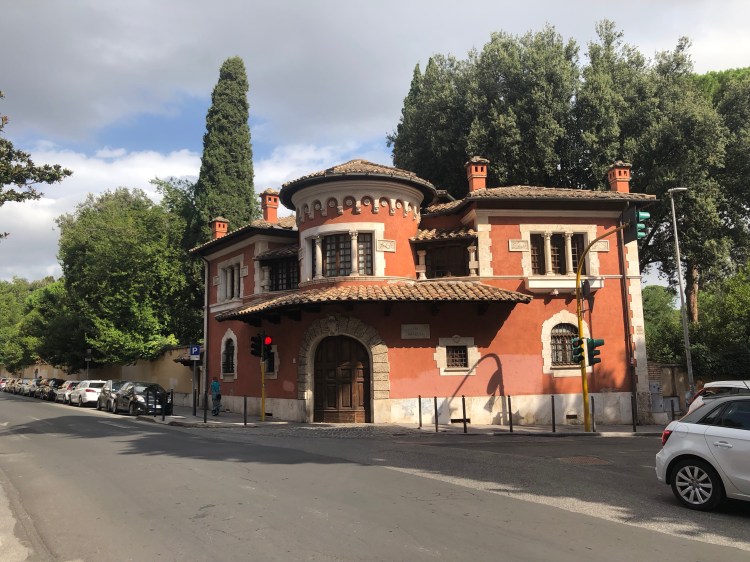
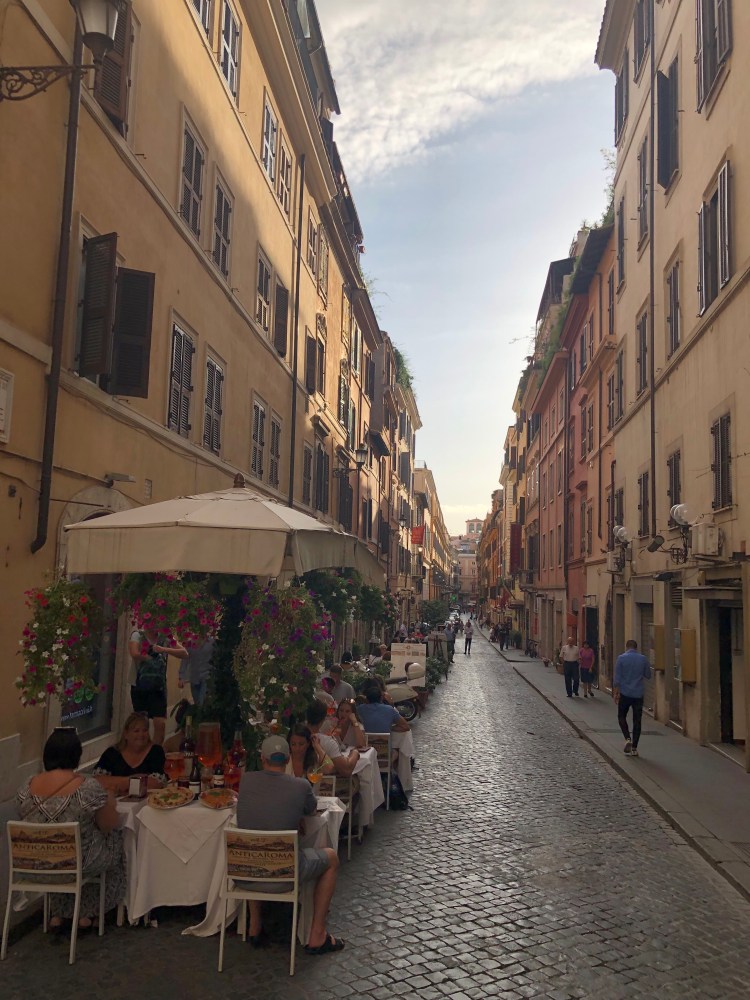
Some Random Pictures from Perugia, Rome, and Vatican City
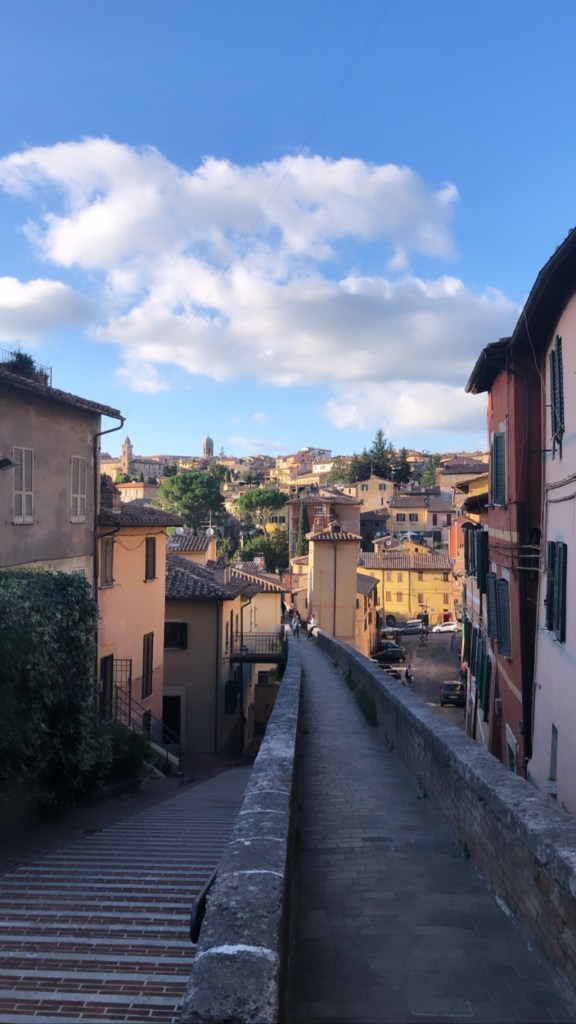
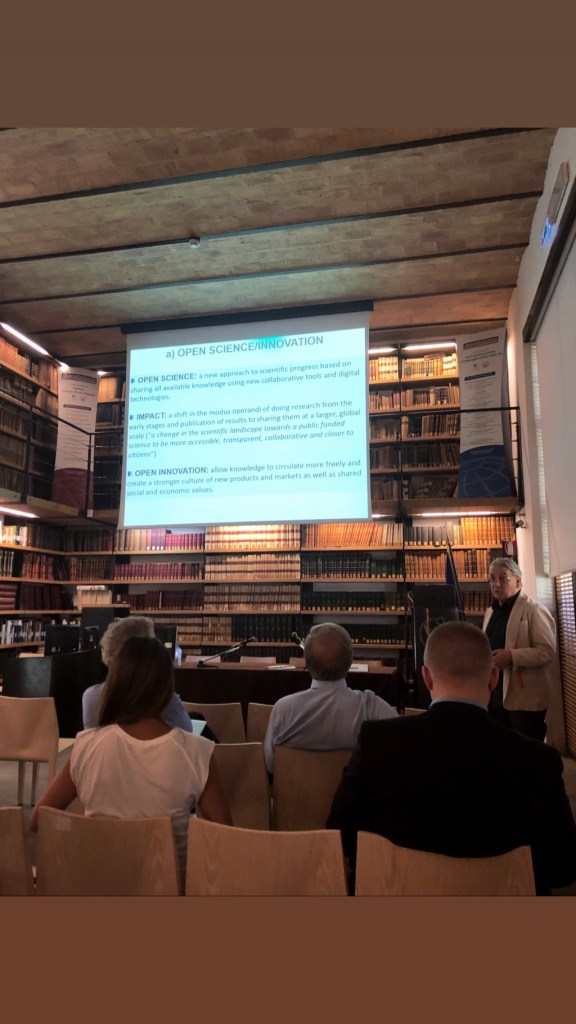
The VaticanVillino RossoA street in RomeA Roman Aquaduct in PerugiaPalazzo dei Priori in PerugiaBiblioteca Accademia Nazionale delle Scienze – Scuderie Vecchie di Villa Torlonia




 Grier Jones